%20Thangka%20%E2%80%93%20White%20Lion%20Rider?unique=c447ef8)
%20Thangka%20%E2%80%93%20White%20Lion%20Rider?unique=c447ef8)
Manjushri (Mañjughoṣa) Thangka – White Lion Rider
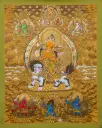
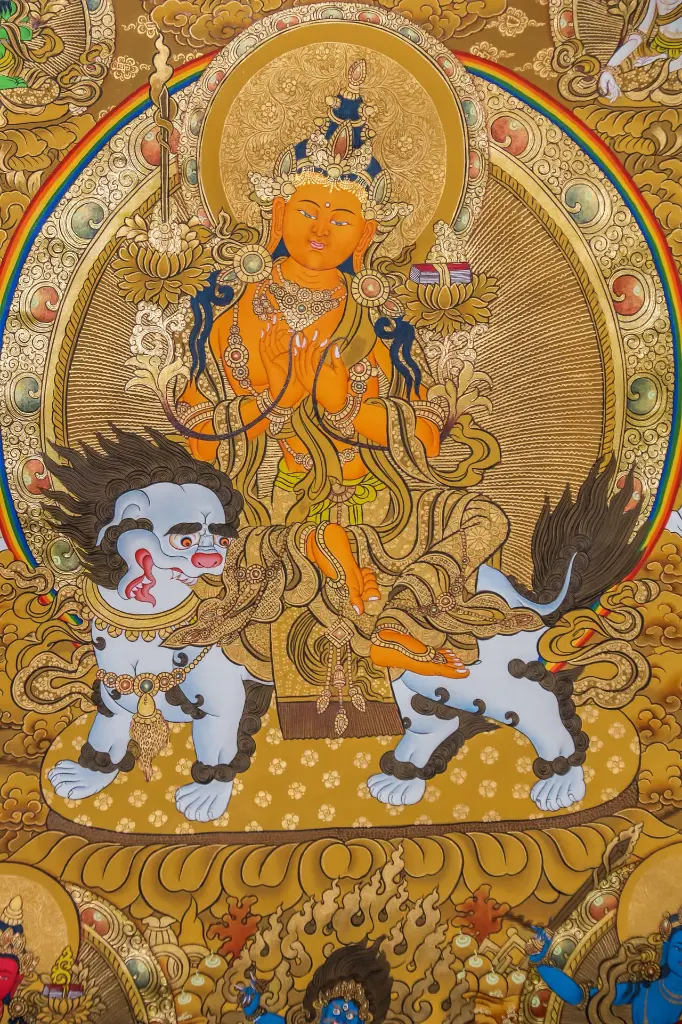
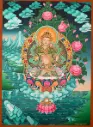
Manjushri (Mañjughoṣa) appears golden, youthful, and gentle. He rides a white lion above a lotus throne.
The composition adheres to Menri drawing and ornamentation rules. Gold detailing rests over mineral pigments on cotton.
Specifications of Buddhist Meditation Art
Dimensions: 75 × 55 cm
Materials: 24K Gold and Natural Mineral Pigments on Cotton Canvas
Origin: Kathmandu, Nepal
Artistic Style: Menri Style Tibetan
Background Type: Serthang Golden Background
Type: Original Hand-Painted
Brocade: Custom Silk Options Available
Consecration: Available Upon Request
Artwork Code: GTD18848
SKU |
GTD18848 |
Categories |
Manjushri |
Iconography of Manjushri: Eloquent Wisdom in Visible Form
Manjushri (Mañjughoṣa) as “Gentle Voice”
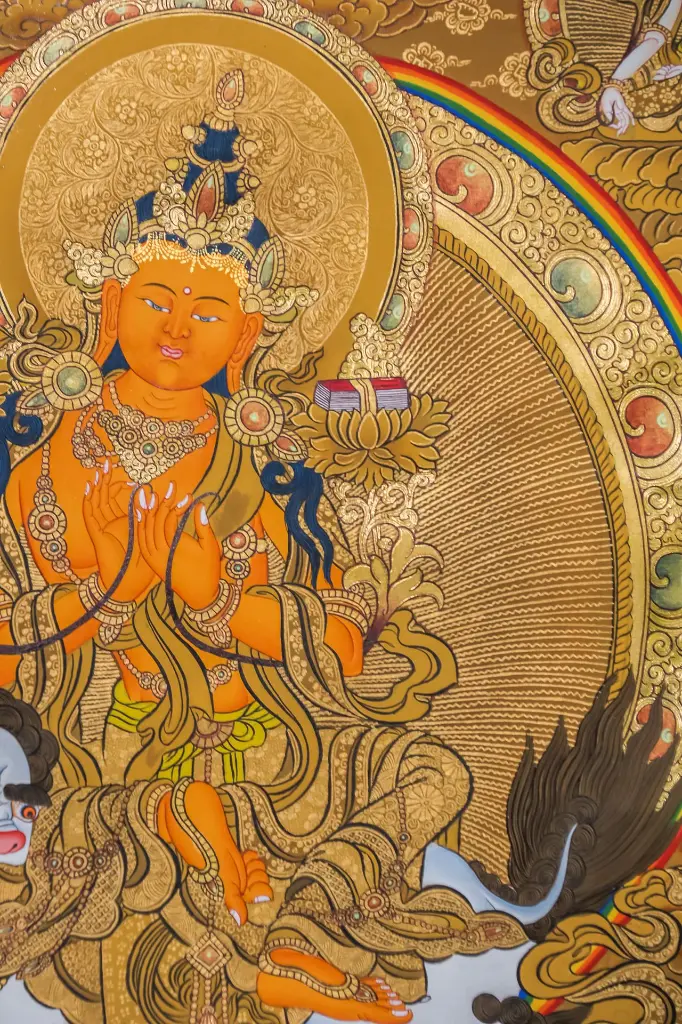
His face is youthful, with a soft smile. He sits calmly, centered on a lotus seat.
The symbols appear as offerings on lotus stems. They emphasize study, teaching, and clear expression.
Dharmachakra Mudra centers the practice of respectful inquiry. It supports listening, reflection, and careful speech.
Right lotus supports the flaming wisdom sword. It represents cutting doubt and conceptual confusion.
Left lotus supports the Prajñāpāramitā book. It represents scripture, memory, and structured explanation.
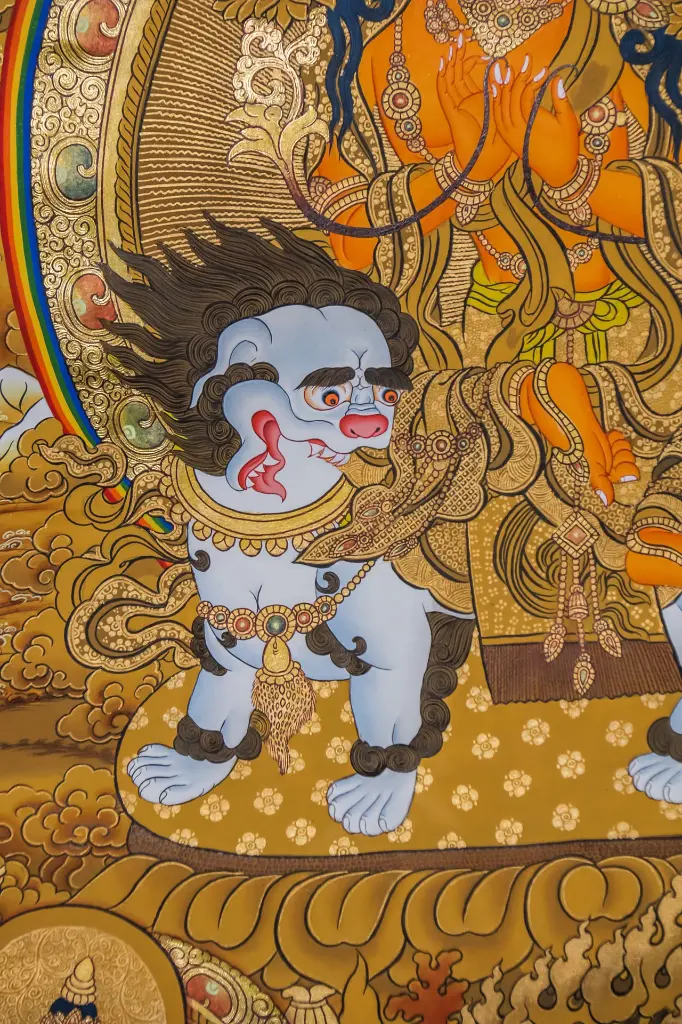
The white lion mount shows fearless, steady confidence. It supports debate, learning, and courageous clarity.
The Surrounding Deities: Five Manjushri Forms and Vajrapani
Six figures frame the central form in balance. They appear above and below within golden clouds.
The upper group reads like a lineage register. The lower group adds power, protection, and activity.
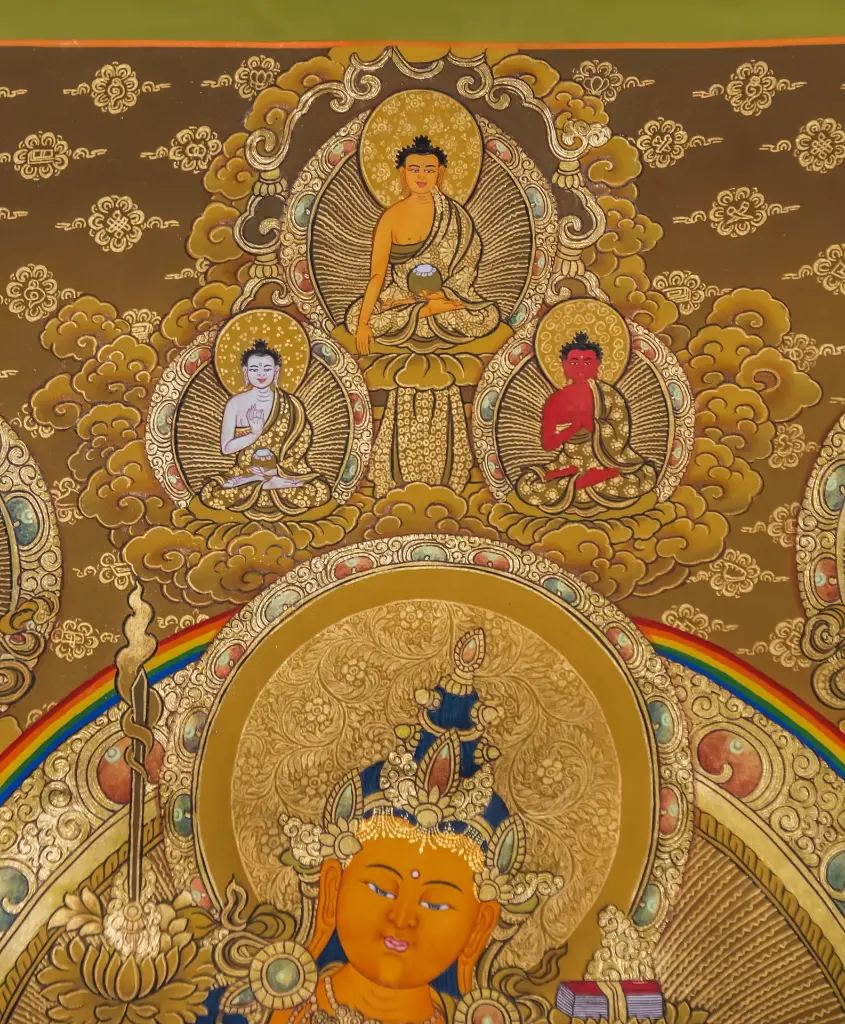
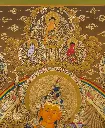
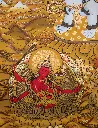
Above: Shakyamuni Buddha
Shakyamuni sits at the upper center, calm and composed. A red Buddha and a white Buddha flank him.
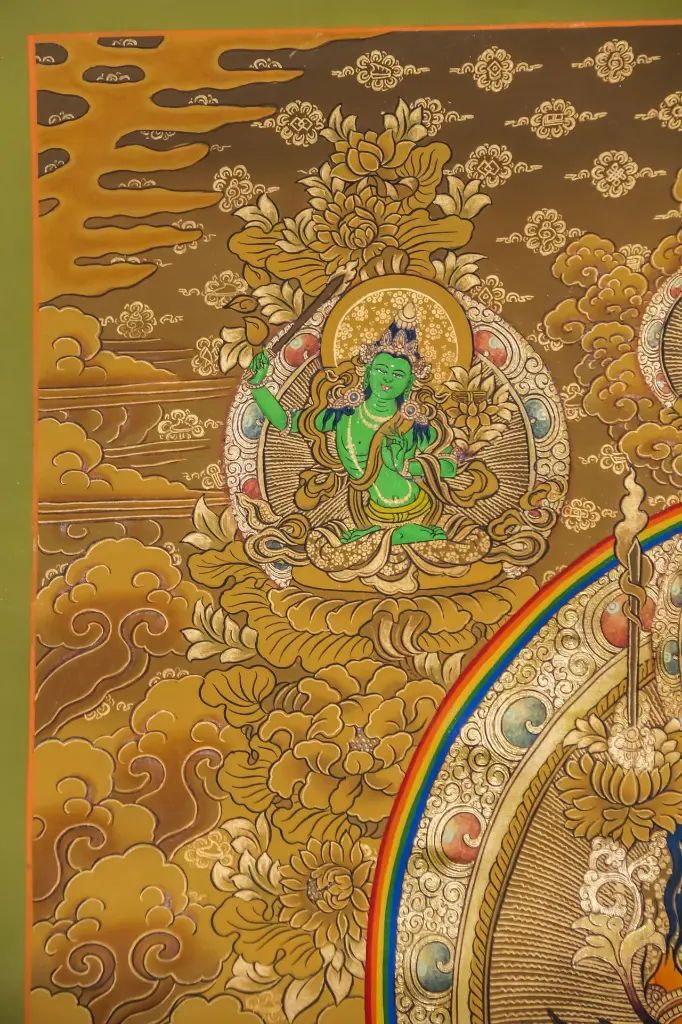
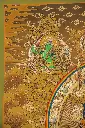
Upper Left: Green Manjushri (Aparacana-like)
Green Manjushri sits at the upper left. His placement follows an Aparacana-style arrangement.
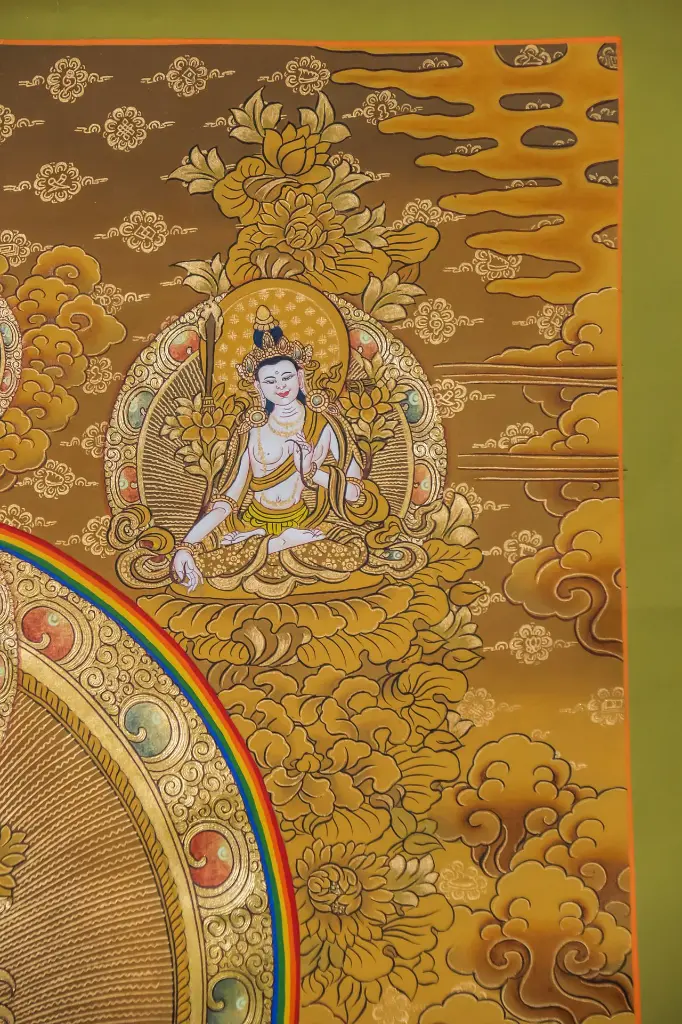
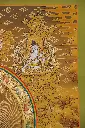
Upper Right: White Manjushri (Sita Manjushri)
Sita Manjushri appears at the upper right, pure white. His presence emphasizes clarity and stainless insight.
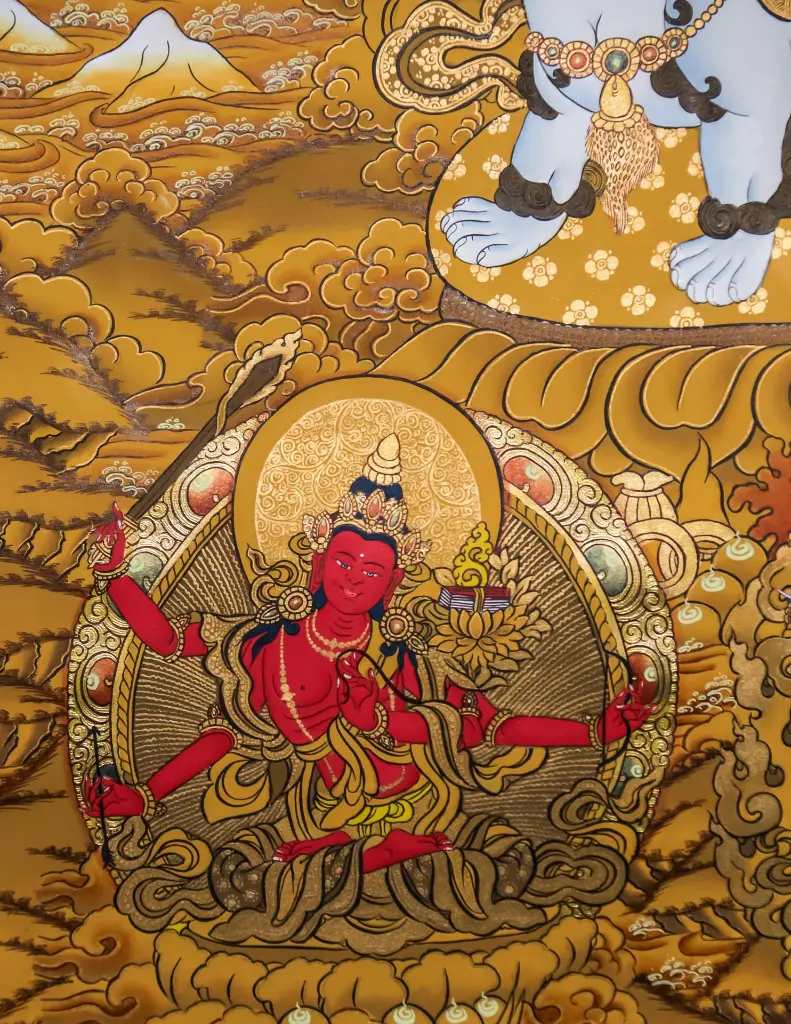
Lower Left: Red Manjushri (Rakta Manjushri), Four-Armed
Rakta Manjushri appears below left, with four hands. Multiple arms signify expanded methods for eloquence.
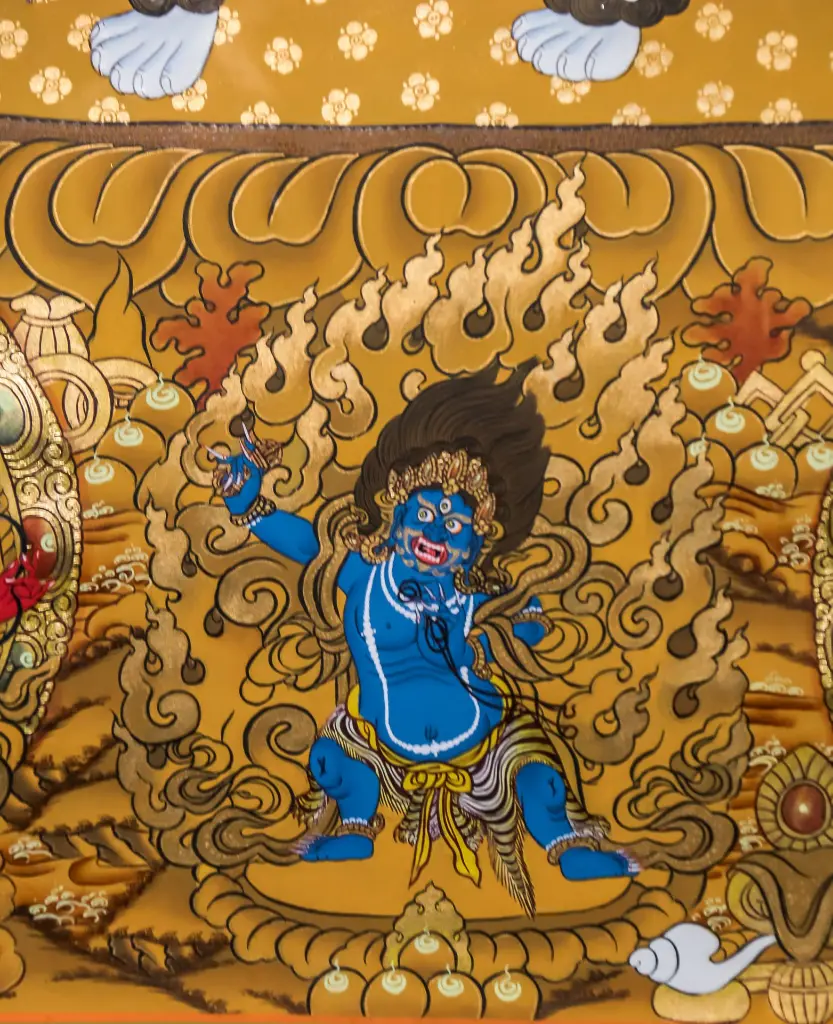
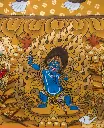
Lower Middle: Vajrapani
Vajrapani stands below center, in dynamic protection. He supports strength, discipline, and steadfast practice.
Lower Right: Krishna Manjushri
Krishna Manjushri appears below right, deep blue. Books rest near his heart; a sword rises upward.
Sacred Setting and Visual Landscape
The ground and sky are rendered in warm gold. This creates a terrestrial scene with a celestial atmosphere.
Cloud bands, flowers, and distant snow peaks appear. The rainbow halo frames the main figure clearly.
Gold linework defines clouds, rocks, and plant forms. The detailing remains consistent across the full field.
The lotus seat stabilizes the central lion-rider. The throne structure keeps the iconography readable.
Lineage and Scriptural Context
“Mañjughoṣa” translates as “Gentle Voice” in tradition. This form is especially popular in Nepalese practice.
The book points to Prajñāpāramitā study traditions. The sword supports analysis, debate, and direct understanding.
Collector Significance and Rarity
This layout combines several Manjushri manifestations. It also includes Vajrapani and Shakyamuni above.
The gold field demands careful control of line density. Small facial features remain clear at this scale.
Artisan Mastery of Sacred Thangka Art
Menri iconometrics guide proportions, ornaments, and seating. The drawing maintains symmetry across the entire assembly.
Mineral pigments are layered for smooth color fields. Gold is applied in outlines, motifs, and highlights.
How to Welcome This Thangka Into Your Life
Place it near a study desk or teaching area. Keep the viewing height near eye level.
This work suits teachers, students, and text practitioners. It also fits a library, office, or meditation room.
Hang at eye level in a quiet space. Begin mornings with one minute of reflection.