Samantabhadra, Tara, Amitayus, Ushnishavijaya, & Jambhala Thangka
Samantabhadra: The Bodhisattva of Universal Virtue and Wisdom
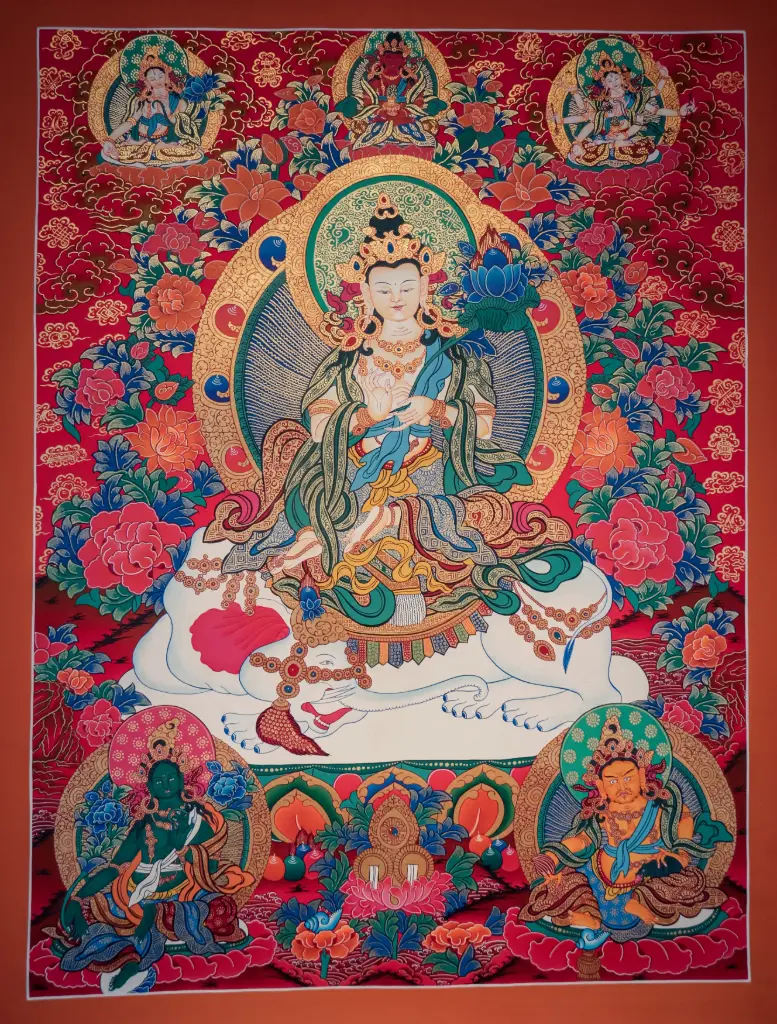
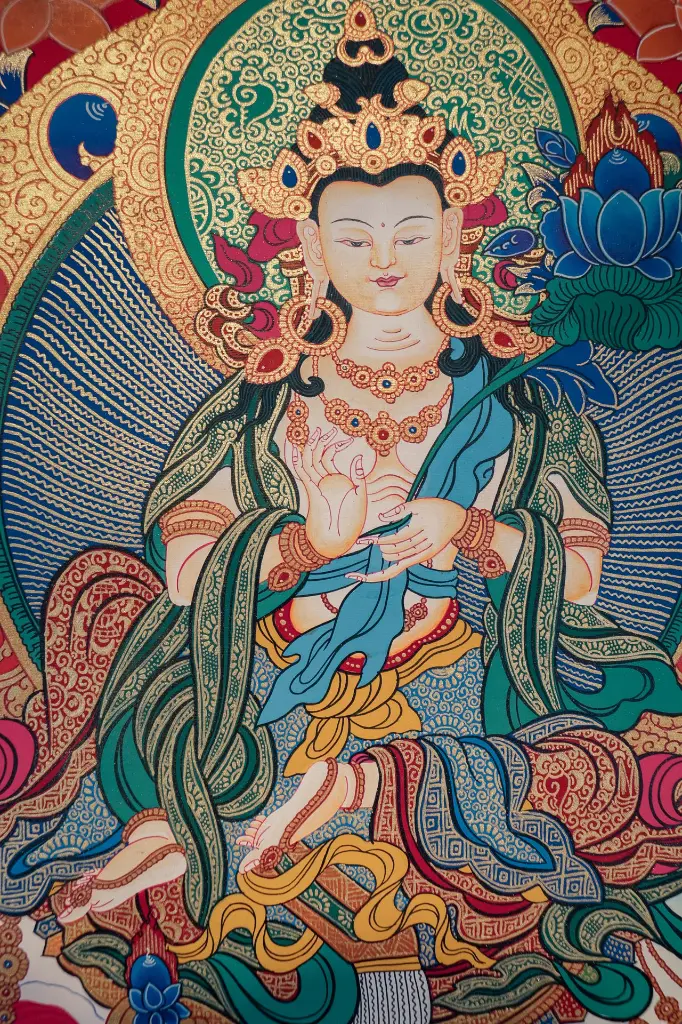
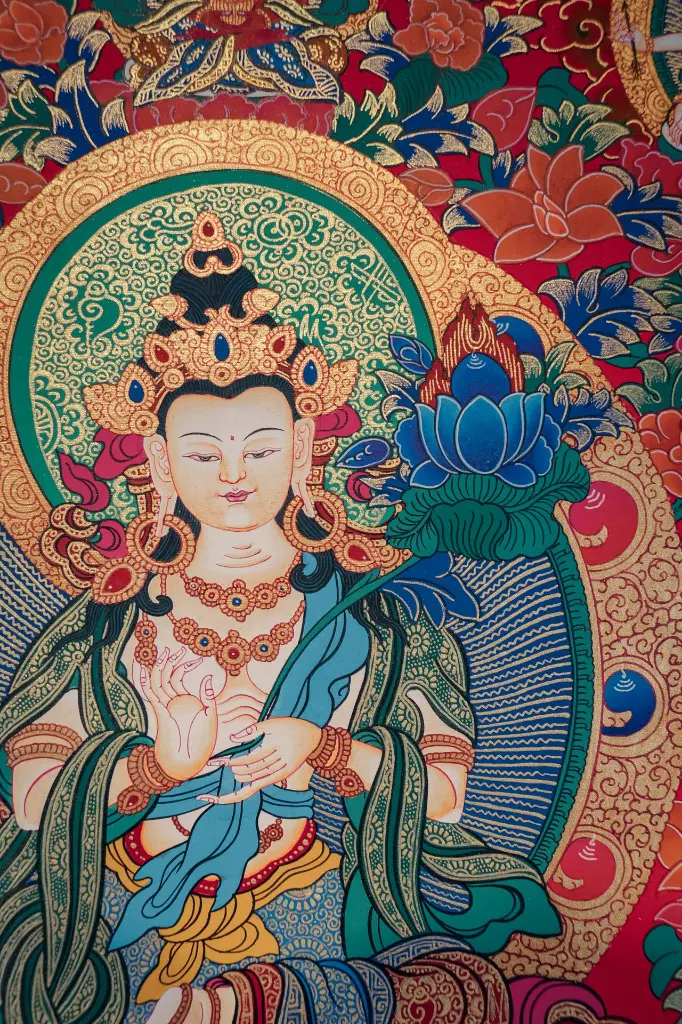
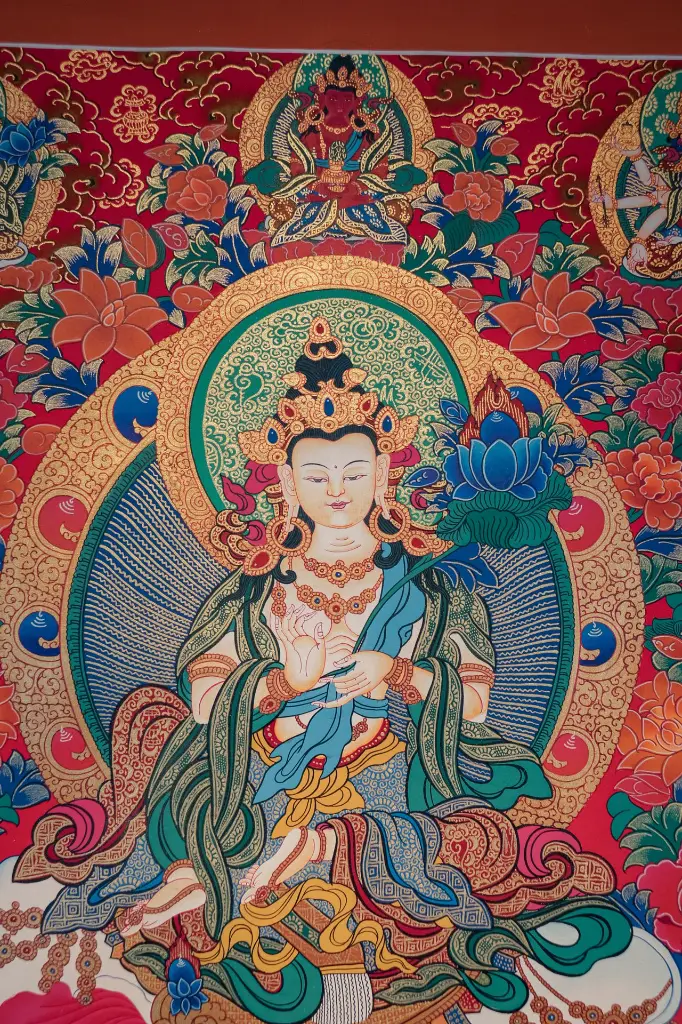
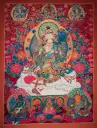
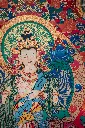
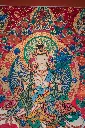
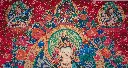
Samantabhadra sits at the center of this sacred assembly. He represents the practice of universal goodness and perfect conduct.
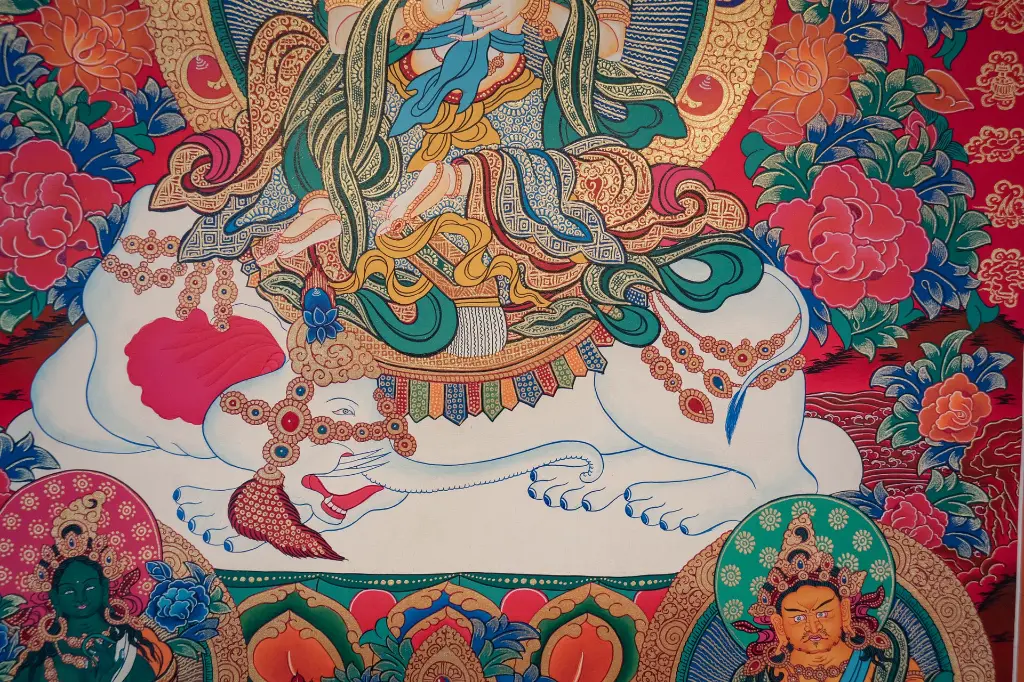
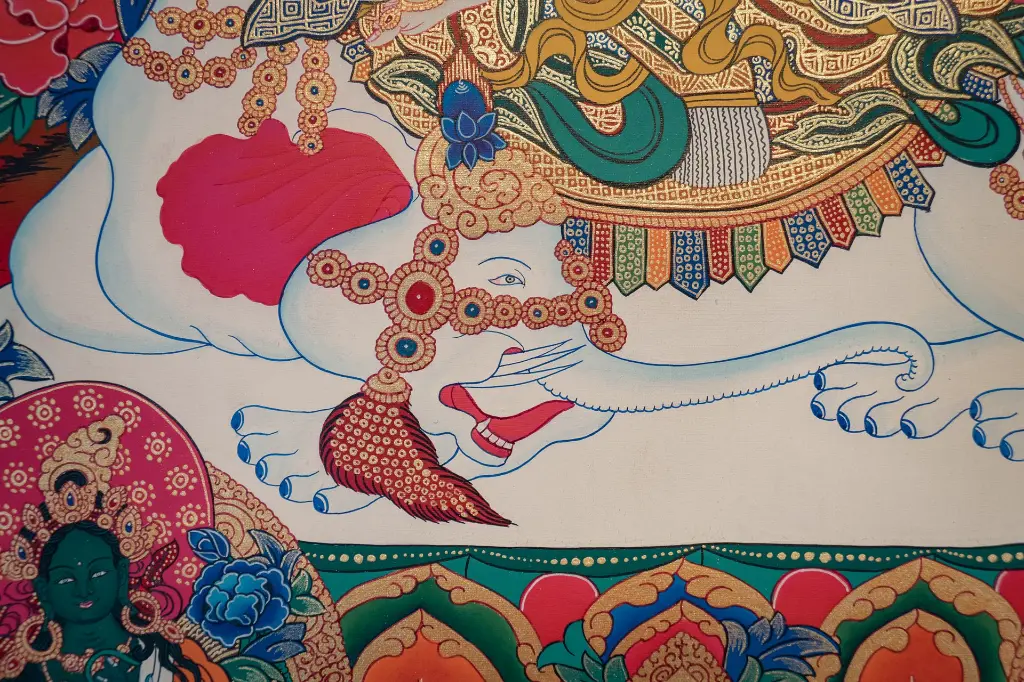
He is often shown riding a six-tusked white elephant. This symbolizes the power to overcome all worldly obstacles.
Specifications
Dimensions: 60 × 45 cm
Materials: 24K Gold and Pure Mineral Pigments on Cotton Canvas
Origin: Kathmandu, Nepal
Artistic Style: Menri Style Tibetan
Background Type: Serthang Golden Background
Type: Original Hand-Painted
Brocade: Custom Silk Options Available
Consecration: Available Upon Request
SKU |
GTC26536 |
Categories |
Samantabhadra |
Iconography of Samantabhadra: Universal Goodness and Key Symbol
Samantabhadra as Universal Virtue
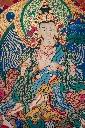
The deity has a peaceful expression and golden skin. He holds a blue lotus flower in his left hand.
The lotus supports a jewel representing enlightened intent.
The white elephant represents strength and steady determination.
This image inspires practitioners to fulfill their spiritual vows. It encourages the path of altruistic action in daily life.
Supporting Figures: The Assembly of Longevity and Protection
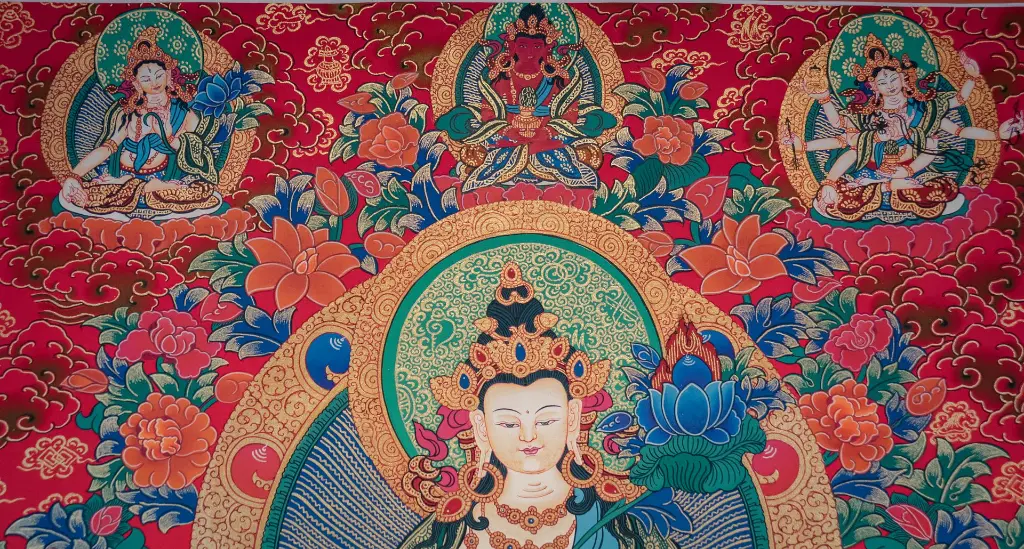
Five deities surround Samantabhadra in a celestial arrangement. They offer protection, longevity, and wealth to the practitioner.
Above: The Long Life Triad
Amitayus resides at the top center for longevity. White Tara and Ushnishavijaya flank him for health and purification.
Below: Protective and Wealth Deities
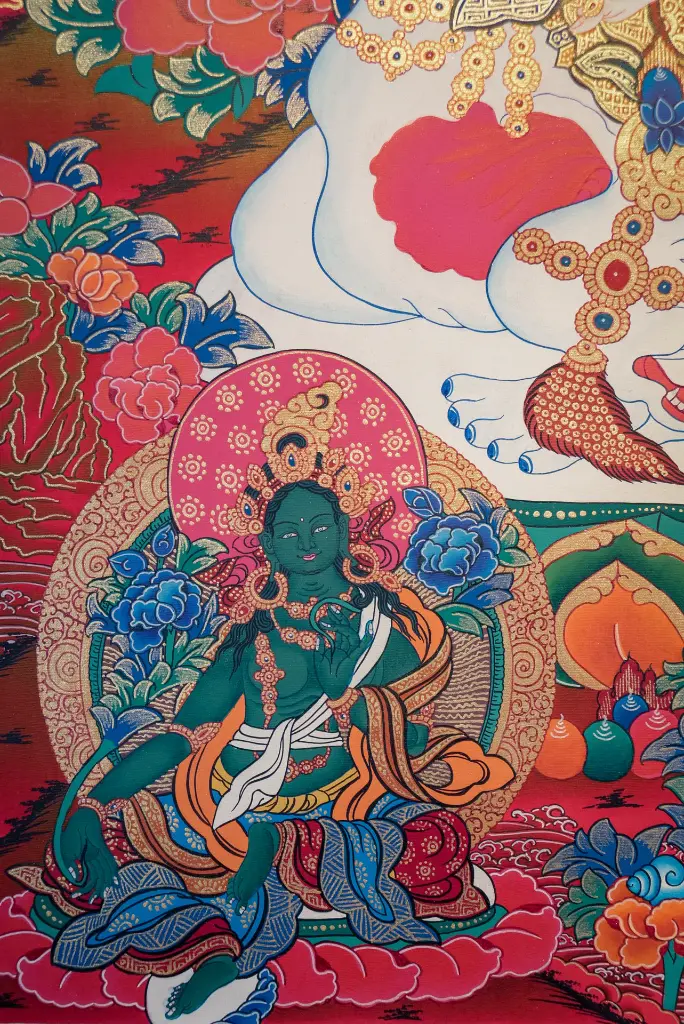
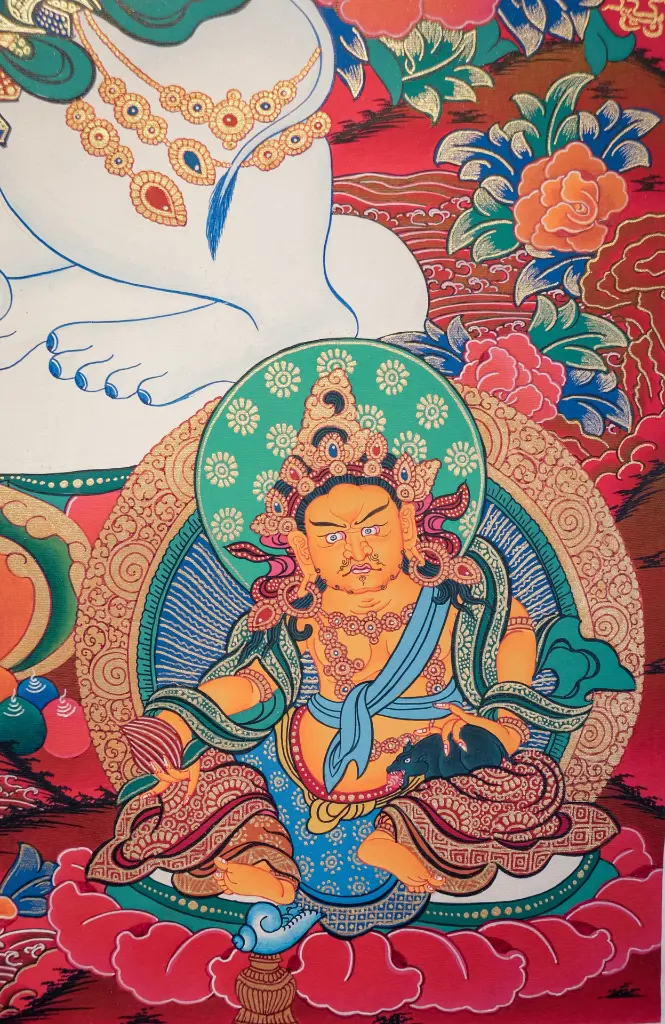
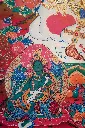
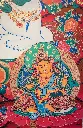
Green Tara sits at the bottom left for swift protection. Yellow Jambhala sits at the right to provide material abundance.
The composition maintains a strict and harmonious iconographic balance. Each figure supports the central path of universal virtue.
Sacred Setting and Visual Landscape
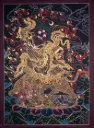
Samantabhadra rests on a lotus throne atop his elephant. Intricate gold linework adorns the cushions and floral backdrop.
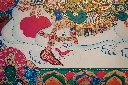
Gold clouds contain the Eight Auspicious Symbols (Ashtamangala).
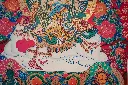
Red terrestrial landscapes provide a rich, grounded contrast.
The Serthang style uses red and gold to create depth. This method highlights the divine nature of the celestial realm.
Lineage and Scriptural Context
This iconography stems from the Avatamsaka Sutra (Ganda-vyūha-sūtra). It emphasizes the "Ten Great Vows" of the Bodhisattva.
The Menri tradition ensures every proportion follows ancient lineage texts. This precision preserves the spiritual efficacy of the sacred image.
This thangka acts as a map for the Mahayana path. It serves as a visual guide for the Bodhisattva ideal.
Sacred Setting and Heritage
The throne features vibrant peonies and gold-etched silk patterns. The background depicts a landscape filled with sacred symbols.
Artists apply mineral pigments for the vivid red tones. Gold detailing uses 24K gold ground into fine paste.
The painting follows the strict Menri Style of Tibet. It remains faithful to the lineage of the Great Masters.
How to Welcome This Thangka
Mantra: Om Samantabhadra Samaye Hum
This thangka supports daily visualization of virtuous conduct. It is perfect for a dedicated shrine or meditation room.
Placement & Interaction:
Hang at eye level in a quiet space.
Begin mornings with one minute of reflection.
This sacred art invites the presence of Samantabhadra.