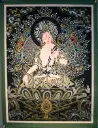
White Tara Thangka – Nagthang Menri – Mother of Long Life
White Tara Thangka Painting in the Nagthang Realm
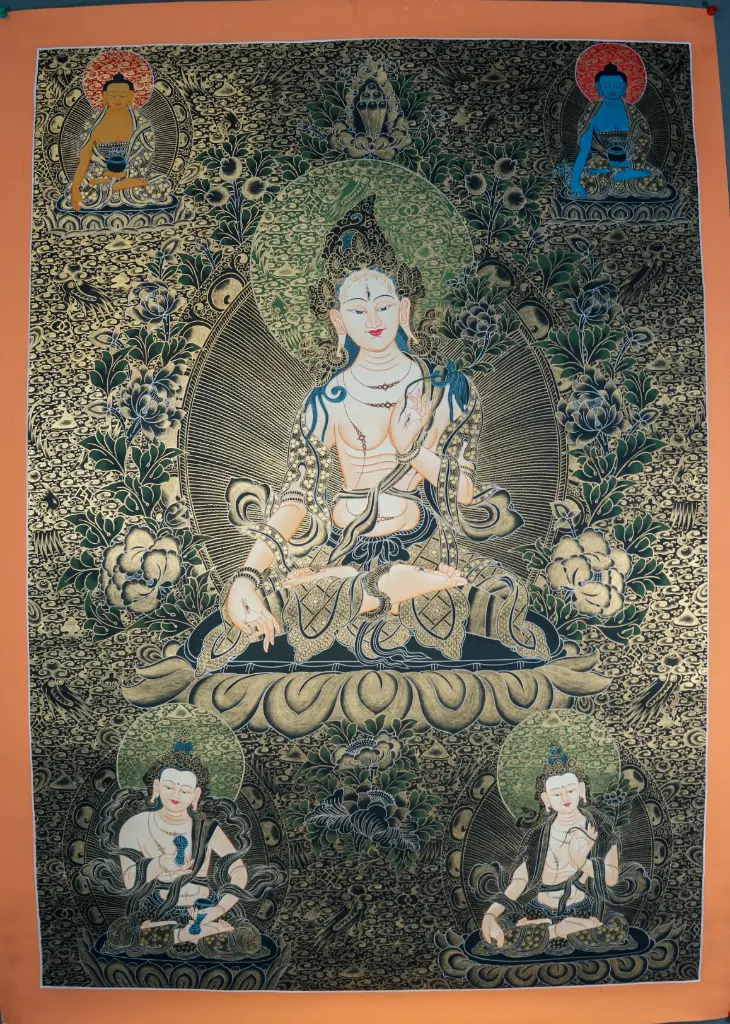
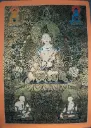
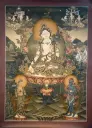
White Tara appears at the center of this White Tara Thangka painting. Hand-painted in Kathmandu with mineral pigments and gold, she is surrounded by teachers, healers, and a smaller Tara.
Specifications
Dimensions: 100 x 70 cm
Materials: Pure Mineral Pigments with Genuine Gold Highlights
Canvas Type: Cotton
Origin: Kathmandu, Nepal
Artistic Style: Menri Style Tibetan
Background Type: Nagthang Black Background
Type: Original Hand-Painted Thangka
Consecration: Available Upon Request
SKU |
GT11239 |
Categories |
White Tara |
Sacred Setting and Visual Landscape
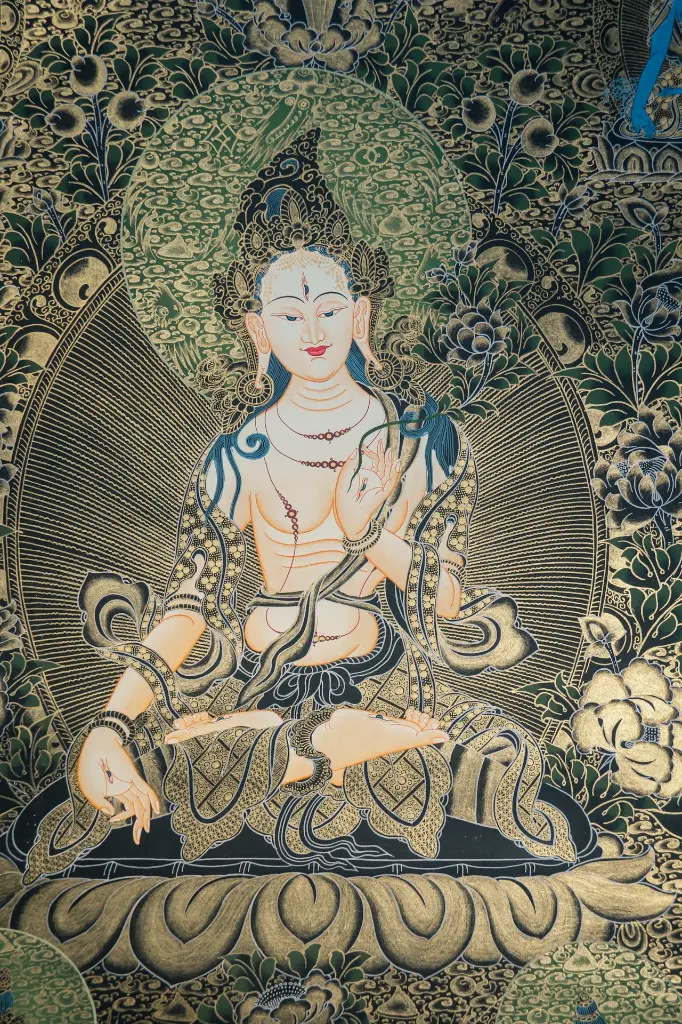
White Tara rests on a lotus throne above a moon disc seat. The lotus suggests purity, and the moon disc suggests calm awareness.
The nagthang black field follows the Menri convention. Plants, clouds, and gold lines shape a grounded sacred landscape.
The scene stays quiet and balanced.
Mandala of White Tara
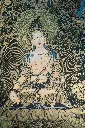
White Tara as Central Presence
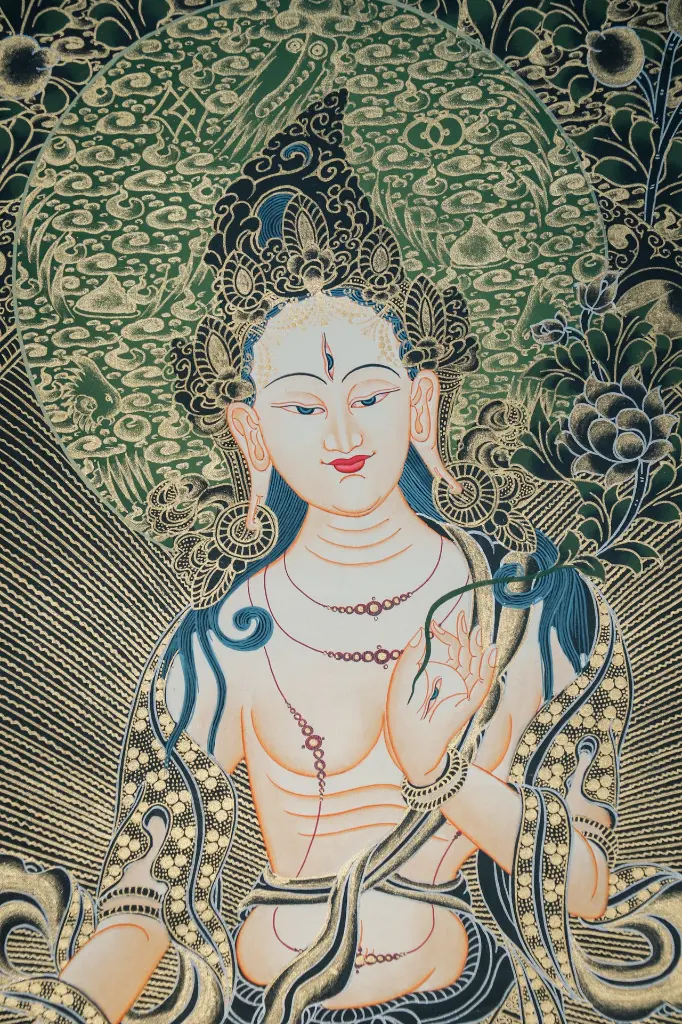
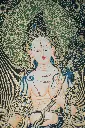
White Tara, also known as Sita Tara, sits in ease with one leg extended.
Her white body, seven eyes, and blue utpala stem signal watchful compassion and long life.
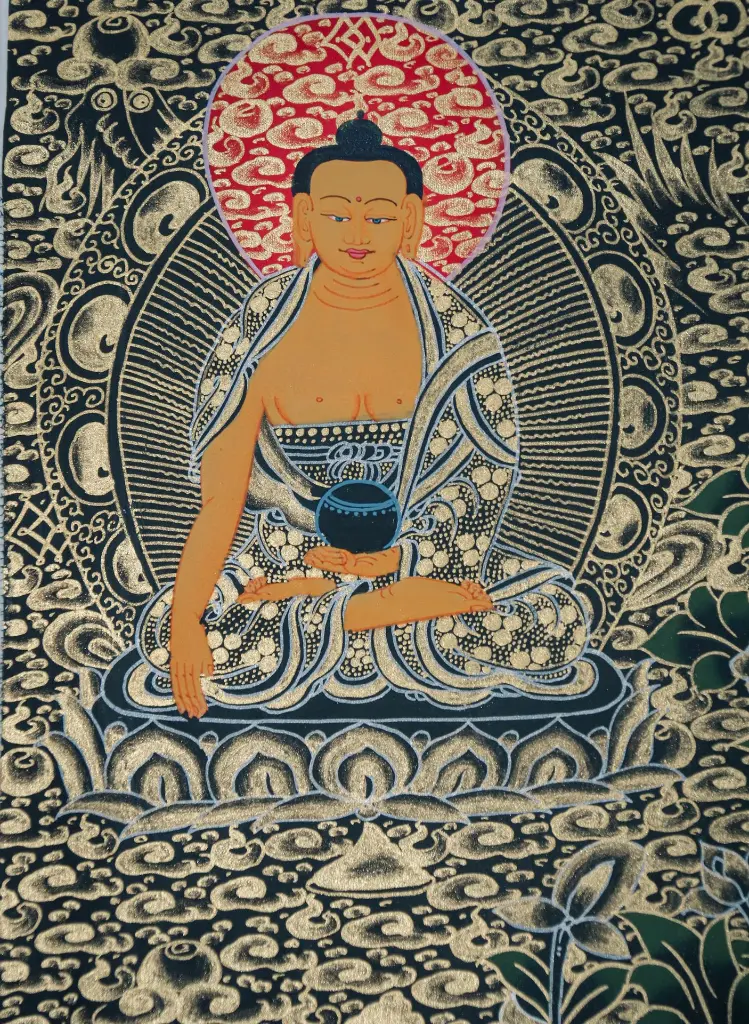
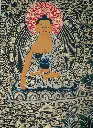
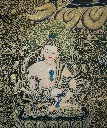
Shakyamuni Buddha in the Upper Left
Shakyamuni Buddha appears in monastic robes with an alms bowl.
His golden presence marks the teaching’s historical source above the mandala.
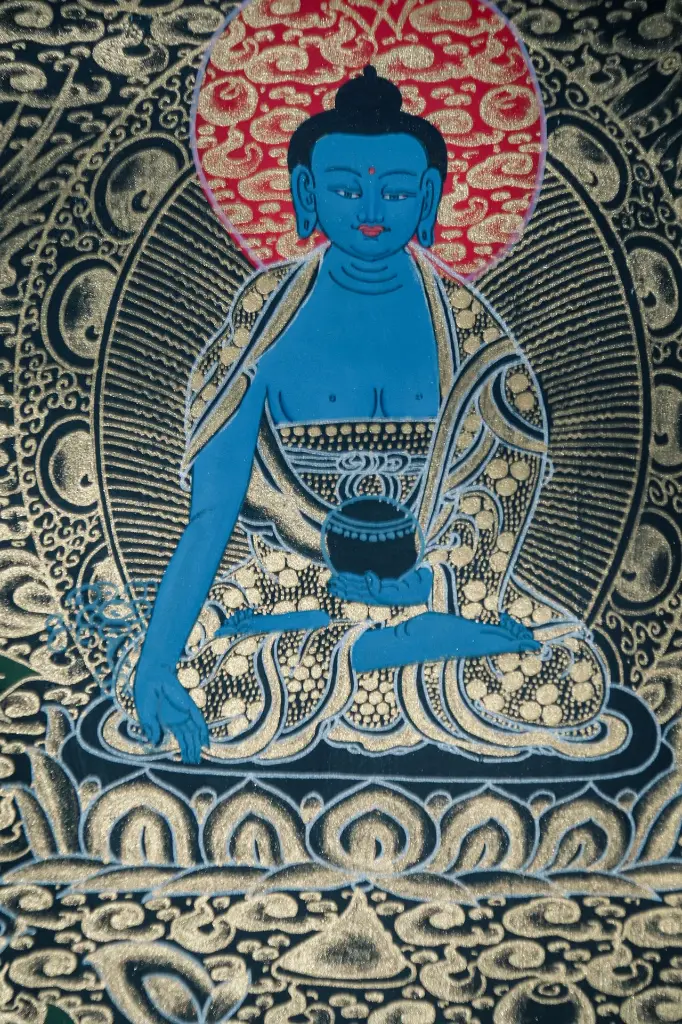
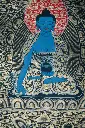
Medicine Buddha in the Upper Right
Medicine Buddha appears in blue with a healing vessel.
His placement links compassion with remedy and care.
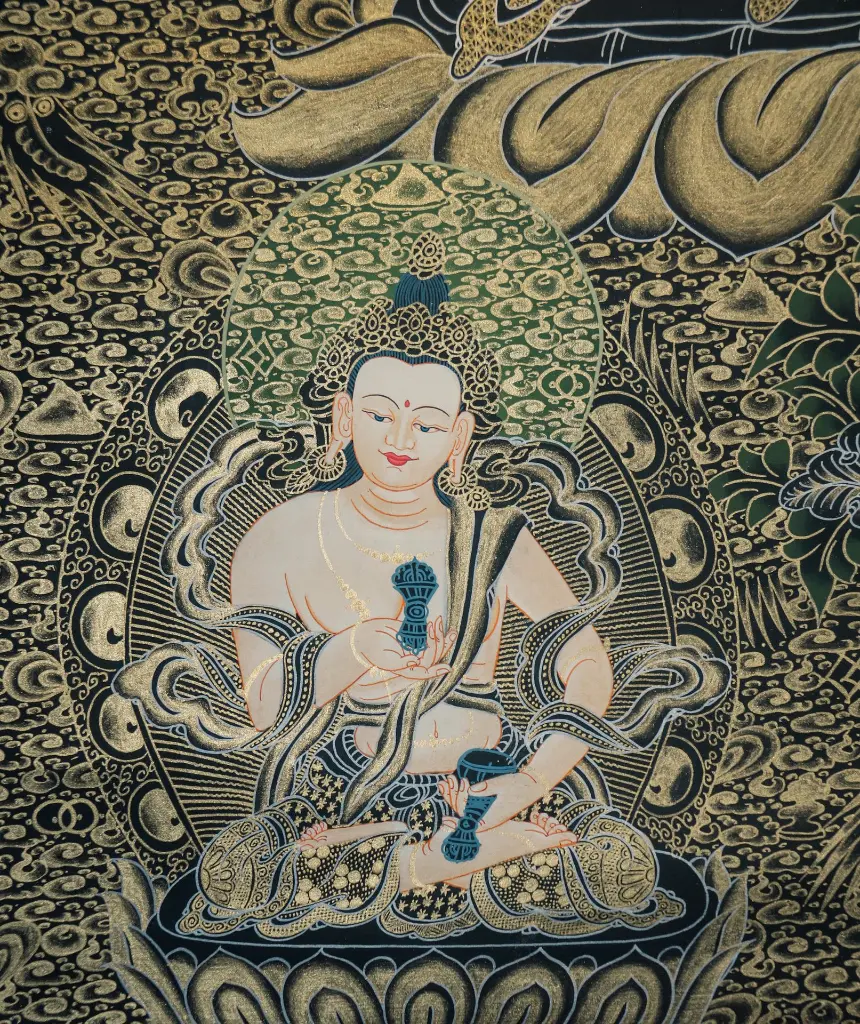
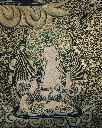
Vajrasattva in the Lower Left
Vajrasattva sits calmly with vajra and bell.
He supports the image through purification and steadiness.
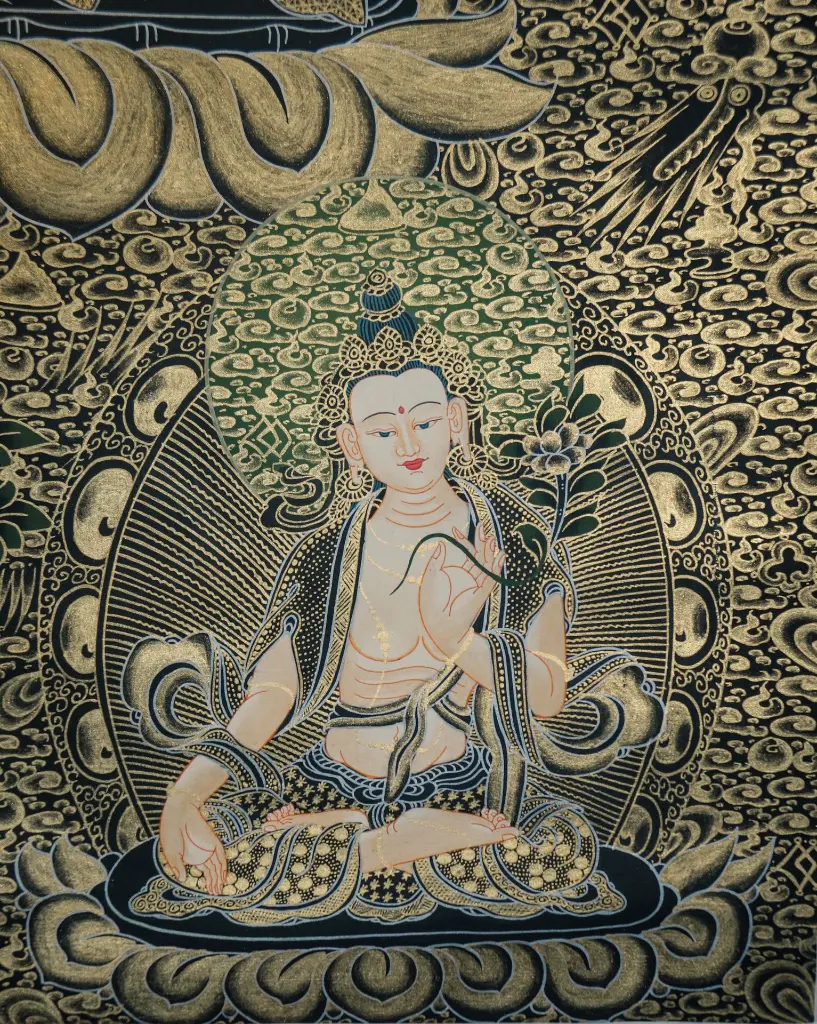
Simple White Tara in the Lower Right
The lower Tara repeats the white form more simply.
She comes from the Twenty-One Taras and softens the lower field.
Their Relationship Within the Mandala
The upper figures look over the central deity.
The lower figures support cleansing, continuity, and attentive practice.
Upper left and right hold the teacher and healer.
Lower left and right hold purification and reflection.
This keeps the composition balanced and easy to read.
It tells a quiet story of lineage, healing, and compassion.
Artisan Mastery
Classical Tibetan iconometric proportions guide the figures.
The Menri style keeps the assembly balanced, and the work was painted in Kathmandu, Nepal.
Layered mineral pigments build the surface slowly.
Genuine gold highlights and fine brushwork shape halos, robes, and the dark terrestrial field.
How to Welcome This Thangka Into Your Life
Place it where you can sit with it each morning. Let White Tara be a quiet point of attention.
It suits a meditation room, study, or healing corner.
It also makes a thoughtful gift for someone drawn to Tibetan Buddhist art.
Placement Suggestions
Place it at a comfortable eye level.
Sit quietly before it each morning.
Reflect on White Tara’s calm presence.
If this White Tara Thangka feels right for your space, welcome it gently. Each hand-painted piece carries small variations in expression.